Insite our performing art summer camp in Leeds
Watch the reels here
The films from our summer intensives are finished. Four of the people who ran the weeks explain what went into them.In July and August, two companies of young performers took over The Grammar School at Leeds for a fortnight.
The first week went on camera. The second went on stage, and ended with a live premiere for families on the Friday afternoon.Both weeks were built around the world of Oz — friendship, rivalry, and two very different witches.
Before you watch them, here is what the week looked like from the four people who were running it.
“Monday is the hardest day of the year” — Emma, Principal and Production Lead
On the Monday of a production week you are standing in a room with children who do not know each other, holding a script nobody has read, with a performance booked for Friday afternoon. There is no version of that which feels comfortable.What makes it work is that we do not pretend otherwise. We tell them on day one: this is a real deadline, and we are going to meet it together. Children are far better at rising to an honest challenge than to a cosy one.
So the week runs like a professional room. Read-through and roles on Monday. Music calls and choreography blocks. Scene rehearsals on a run, notes, run cycle. Stagger-throughs by Wednesday, full runs on Thursday, tech and dress on Friday morning.The part parents do not see is whether the company circle is at a quarter to four every day, where we go through what grew and what is still loose. It is fifteen minutes and it is the most important block on the timetable. A young performer who can take a note without hearing it as criticism has learnt something that will outlast any part they play.
By Wednesday the Younger Company owned Act One and the Older Company owned Act Two, and neither was thinking about the deadline any more. That is the moment the week turns.”Nobody arrives able to do it.
That is the point” — Sonia, Principal and Movement Lead
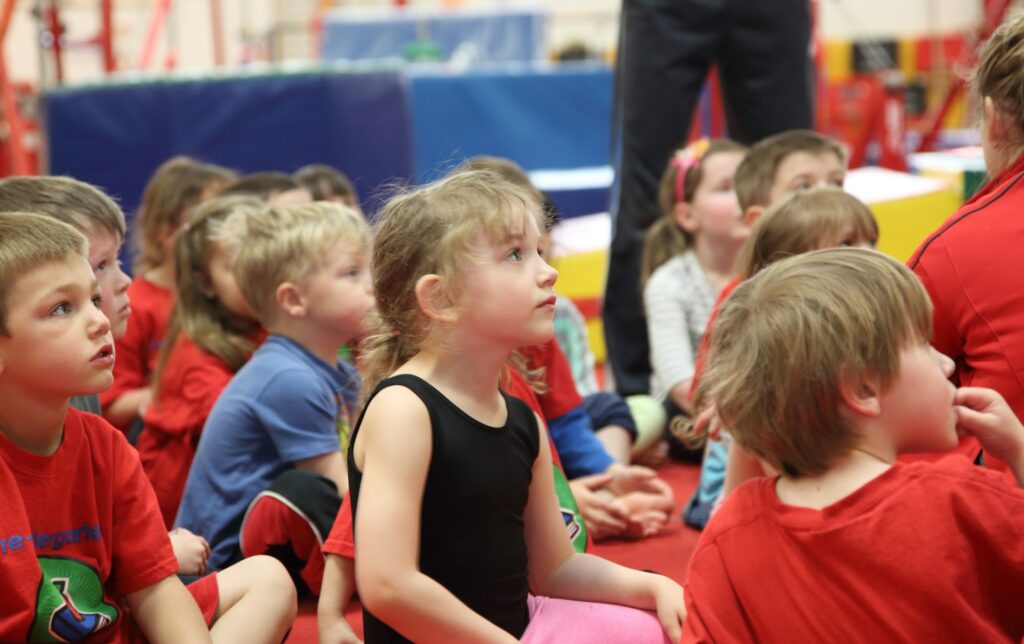
I teach choreography from zero every single time. It does not matter what a child has done before. On the first block I am looking at fifty people who move in fifty different ways, and by Friday they have to move as one company.
The trick is that I never ask them to be good at it on Monday. I ask them to be exact. Count, shape, weight, direction. Exactness is learnable in a week in a way that natural talent is not, and a company that is exact together looks extraordinary from the audience even when every individual is still thinking hard about their feet.
Movement is also where the shy ones come through. A child who will not speak up in a scene will often lead a phrase of choreography, because the body gets there before the confidence does. I have watched that happen more times than I can count, and it happened again in August.
The other half of my week was the set. Our crafts team build it on site, with the company, which means the young performers walk onto something they helped make. You can see the difference in how they stand on it.
“The camera asks for less, and that is much harder” — Paige
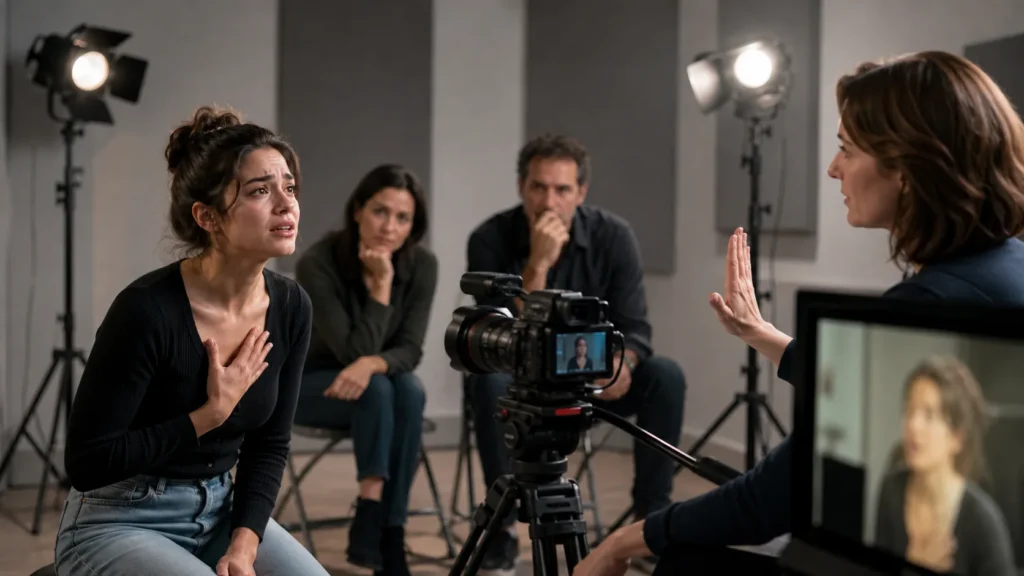
Everything a young performer is taught on stage — project, fill the room, make it land at the back — has to be unlearnt in front of a lens. The camera is eighteen inches from your face. It does not need you to tell it anything. It needs you to think, and it will photograph the thinking.
That is a genuinely difficult adjustment, and it is the one that separates the children who can act from the children who can perform. The film week was built around it. Stillness. Eyelines. Reacting rather than waiting for your line. Hitting a mark without looking for it.
Watch the scenes and look at the reaction shots — the moments where a young actor has nothing to say and holds the scene anyway. Those are the hardest things in the showcase, and they are the ones I would point an agent at.
The other thing the week gave them is a self-tape. Every young performer who wants to work now needs clean, well-lit footage of themselves on a plain background with good sound. That used to mean knowing someone. These children walked out of a school hall in Leeds owning one.
“They asked better questions than most adults do” — Natalie Davies, guest artist
I came in for a masterclass midweek, which is the point in any intensive where a company either opens up or closes down. This one opened up.What struck me was the questions. Not “how do I get an agent”, which is what I usually get, but things like how you keep a scene alive on the fourth take, and what to do with your hands when the character is lying. Those are working actors’ questions. Somebody had taught them to ask those.
I also noticed how they took notes. Nobody flinched. A note landed, they tried it, it changed. That is a room where the standard has been set well before I walked into it, and it is rarer than you would hope.I have taught in a lot of places. This was not a holiday club with a theatre theme. It was a training week, and the young people in it knew that.
Watch what they made
The scenes below were cast, rehearsed and filmed inside five days.
Click here to watch reels
Families who were with us this summer: your child's full scenes and the complete Studio Premiere are in your private showcase.
What's next in Leeds
Launch of Sunday stage and screen school at GSAL.
We’ve had to delay the opening of our Sunday stage and screen performing arts school at GSAL due to venue arrangments. After a lot of planning behind the scenes we are now ready to open our brand new weekly stage and theatre school at The Grammar School at Leeds.
We would love to invite you to our launch event on the on the 10th January 2027.
Next Easter and Summer
We’ll build on this summer’s success with our next Holiday Intensives in Leeds and York next summer, for ages 7 to 18, with the same two-week format—one week on camera, one week on stage.
Families who were with us this year get first refusal before places open publicly.